DRC Joins Luxembourg Rail Protocol, Opening Door to Major Rail Investment in Africa
DRC Accession to Luxembourg Rail Protocol Set to Unlock Rail Investment and Boost African Trade Corridors
The Democratic Republic of Congo (DRC)’s accession to the Luxembourg Rail Protocol is being viewed as a major milestone for Africa’s transport and logistics sector, with the potential to unlock private investment in railway rolling stock and strengthen key regional trade corridors.
The Luxembourg Rail Protocol, which entered into force on 8 March 2024, establishes an internationally recognised legal framework that protects the rights of financiers and lessors of railway equipment.
By reducing legal uncertainty and investment risk, it lowers the cost of financing rail assets, particularly locomotives and freight wagons.
Across Africa, governments have made significant investments in rail infrastructure to improve connectivity and reduce transport costs. However, a persistent challenge has been the shortage of rolling stock, which continues to constrain freight movement on many regional rail networks.
The Protocol addresses this gap by creating a more secure investment environment for private capital, making it easier to finance cross-border railway equipment and operations.
The DRC’s accession is particularly significant due to its strategic position at the heart of the continent and its vast mineral wealth.
The country plays a central role in regional trade flows, especially for critical minerals such as copper and cobalt that are essential to global energy transition supply chains.
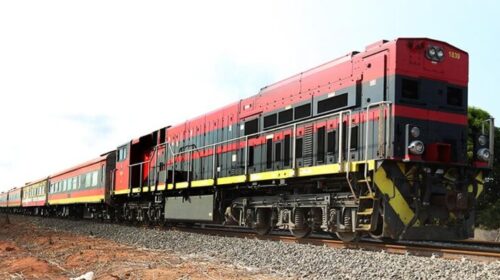
One of the most immediate beneficiaries is expected to be the Lobito Corridor, which links the mineral-rich Copperbelt regions of the DRC and Zambia to Angola’s Port of Lobito on the Atlantic Ocean.
The corridor is increasingly seen as a strategic export route for African minerals destined for global markets.
Despite ongoing investments in rail infrastructure along the corridor, limited availability of locomotives and freight wagons remains a key bottleneck.
The Luxembourg Rail Protocol is expected to help address this challenge by improving access to long-term financing for rolling stock expansion.
The DRC becomes the second Southern African Development Community (SADC) member state to ratify the Protocol after South Africa, which joined in 2025.
Gabon is also a contracting state, while Mozambique has signed the agreement.
Other African countries, including Kenya, Ethiopia, Namibia, Zimbabwe and Eswatini, are reportedly considering adoption.
The growing interest reflects a broader shift toward strengthening rail logistics as a foundation for economic integration under the African Continental Free Trade Area (AfCFTA).
Improved rail systems are expected to reduce logistics costs, enhance regional connectivity and improve Africa’s export competitiveness.
Experts say the Protocol could help attract long-term institutional investors such as pension funds, export credit agencies and development finance institutions, which have traditionally been cautious about African rail projects due to legal and asset recovery risks.
The Rail Working Group (RWG), which promotes global implementation of the Protocol, has welcomed the DRC’s accession, describing it as an important step toward mobilising private capital for railway development across Africa.